 Image 1 of 1
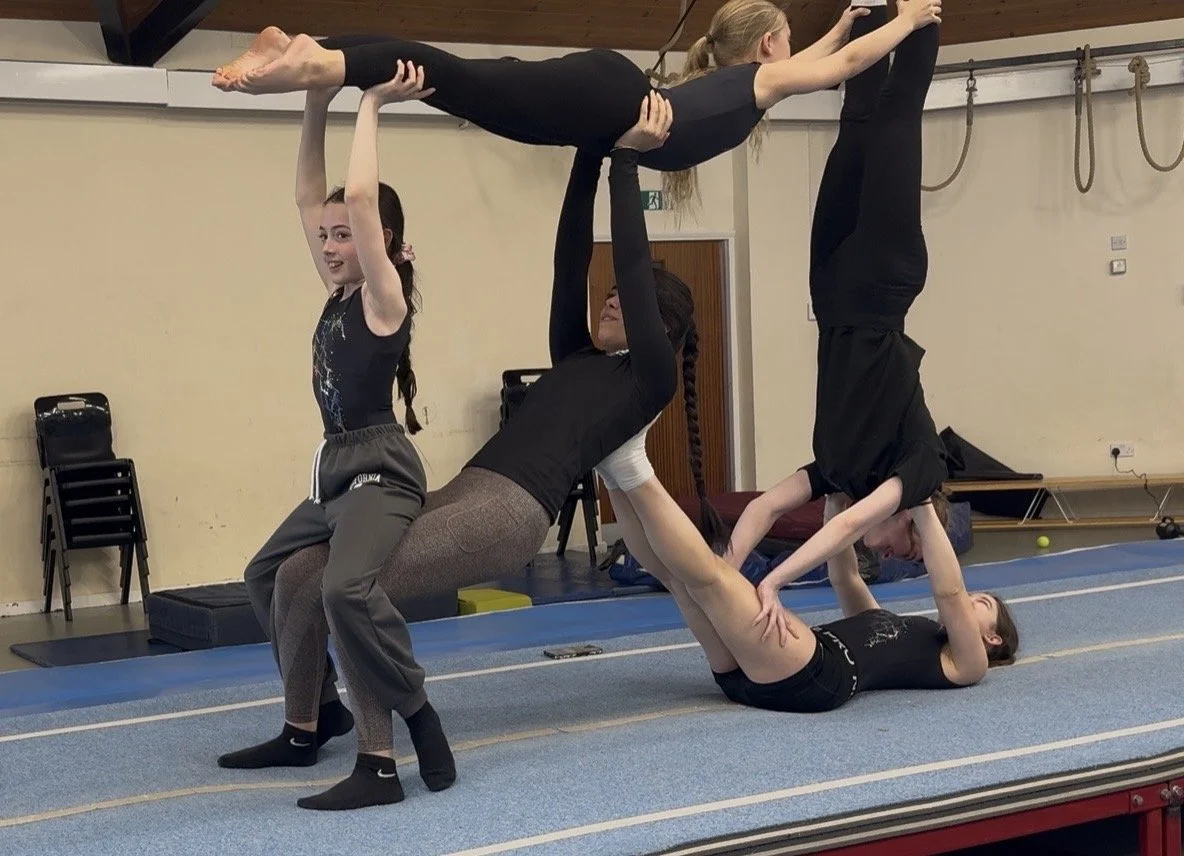
Acrobatic Gymnastics is a dynamic and artistic discipline that combines choreography, strength, flexibility, and teamwork. Performed on a 12 x 12 metre sprung floor and set to music, routines are expressive, elegant, and often breathtaking — showcasing gymnasts' ability to work in perfect harmony.
This discipline is built on trust and cooperation, with gymnasts performing in pairs or groups. Each partnership is carefully balanced based on physical and psychological qualities:
Pairs: Men’s, Women’s, and Mixed
Groups: Women’s (3 gymnasts) and Men’s (4 gymnasts)
In each team, the Top gymnast is typically smaller, agile, and highly flexible, while the Base(s) are strong, stable, and powerful — supporting and catching their partners during complex skills.
Routines last up to 2 minutes and 30 seconds and include three types of elements:
Balance (Static): Pyramids and holds requiring strength and control
Dynamic: Throws, catches, and tumbling elements
Combined: A mix of both balance and dynamic skills
Acrobatic Gymnastics is not only a physical challenge but also a test of trust, timing, and teamwork. It’s ideal for gymnasts who love to perform, express themselves through movement, and work closely with others.
Great Britain is a leading nation in Acrobatic Gymnastics, with a strong history of success at World and European Championships.
Acrobatic Gymnastics is a dynamic and artistic discipline that combines choreography, strength, flexibility, and teamwork. Performed on a 12 x 12 metre sprung floor and set to music, routines are expressive, elegant, and often breathtaking — showcasing gymnasts' ability to work in perfect harmony.
This discipline is built on trust and cooperation, with gymnasts performing in pairs or groups. Each partnership is carefully balanced based on physical and psychological qualities:
Pairs: Men’s, Women’s, and Mixed
Groups: Women’s (3 gymnasts) and Men’s (4 gymnasts)
In each team, the Top gymnast is typically smaller, agile, and highly flexible, while the Base(s) are strong, stable, and powerful — supporting and catching their partners during complex skills.
Routines last up to 2 minutes and 30 seconds and include three types of elements:
Balance (Static): Pyramids and holds requiring strength and control
Dynamic: Throws, catches, and tumbling elements
Combined: A mix of both balance and dynamic skills
Acrobatic Gymnastics is not only a physical challenge but also a test of trust, timing, and teamwork. It’s ideal for gymnasts who love to perform, express themselves through movement, and work closely with others.
Great Britain is a leading nation in Acrobatic Gymnastics, with a strong history of success at World and European Championships.